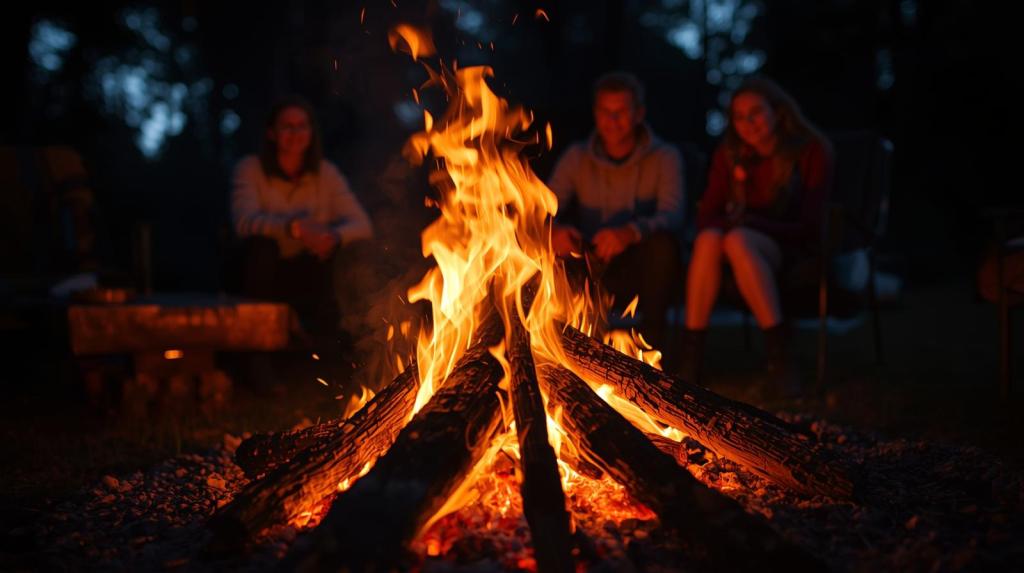
There is something ancient and deeply familiar about sitting near fire.
The soft crackle, the slow dance of orange light, the warmth brushing the skin — it pulls us in, quiets the mind, and makes the world feel safer for a moment.
But this isn’t just a poetic feeling.
Science, psychology, and history all confirm the same truth:
fire soothes us for biological reasons, not only symbolic ones.
🔥 The Science: Why Flames Calm the Nervous System
1. Fire lowers blood pressure and activates the parasympathetic system
A study from the University of Alabama found that watching a fire significantly lowers blood pressure and slows the heart rate. The longer participants watched, the deeper the relaxation became.
Why?
Because fire triggers our parasympathetic nervous system — the part responsible for “rest and digest.”
The gentle, rhythmic movement of flames acts like a natural sedative for the brain.
2. The sound of fire reduces cortisol
Research on “biophilic sounds” (nature sounds) shows that crackling and popping fire noises:
- reduce cortisol levels,
- increase alpha brain waves (linked to calm focus),
- improve emotional regulation.
The brain reads these sounds as safe, familiar, grounding.
3. Warmth regulates the emotional center of the brain
Warmth activates the insula — the region associated with physical comfort, trust, and emotional closeness.
That’s why sitting near fire feels like coming home to yourself.
💛 The Psychology: Fire as a Portal to Presence
Psychology calls this effect soft fascination — a state where the mind is gently interested but not overstimulated.
Watching fire puts us exactly in that sweet spot:
- not bored,
- not overwhelmed,
- simply… here.
This kind of attention allows the mind to rest, process emotions, and reset the nervous system naturally.
Fire also supports:
- deeper breathing,
- longer exhalations,
- reduced muscle tension,
- a shift into calm, reflective thinking.
In psychotherapy, fire is often used in grounding exercises because it naturally anchors attention into the present moment.
🔥 The History: We Were Born to Love Fire
Fire has been with us for about 1.7 million years.
It fed us, protected us, brought us together at night, and became a center of community and storytelling.
Because of this long evolutionary relationship, humans developed an automatic positive response to fire — a sense of:
- safety,
- belonging,
- rest after danger,
- connection with others.
Anthropologists believe that our brains literally evolved to calm down around fire because night-time fires meant the environment was secure.
In other words:
your body relaxes near fire because your ancestors survived by doing exactly that.
✨ Fire and Meditation: A Natural Combination
Meditating with fire amplifies everything:
- the rhythm of flames acts as a visual mantra,
- the warmth keeps the body relaxed,
- the soft sound keeps the mind awake but calm,
- the shifting shapes prevent mental overthinking.
Studies show that “open-focus meditation” is easier when the gaze rests on a simple, moving natural element — flames are perfect for this.
Fire-based meditation supports:
- reduced anxiety,
- increased mindfulness,
- emotional clarity,
- deeper introspection,
- improved sleep quality.
🌕 How to Practice Fire Meditation (simple steps)
- Sit near a candle or fireplace.
Big or small — the effect works the same. - Soften your gaze on the flame.
Don’t stare hard. Let your eyes stay gentle. - Breathe slowly.
Match your breath to the rhythm of the flame. - Let the fire represent release.
Imagine the flame burning away tension, thoughts, or emotional heaviness. - Stay for 5–10 minutes.
Research shows this is enough to regulate the nervous system. - Close with gratitude.
Thank the moment for giving you peace.
🌟 The Beautiful Truth
Fire calms us not because it is mystical —
but because it is deeply, biologically familiar.
It is memory.
It is safety.
It is the oldest form of meditation on Earth.
When we sit with fire, we connect with thousands of years of human history… and with the quietest part of ourselves.







Leave a comment